
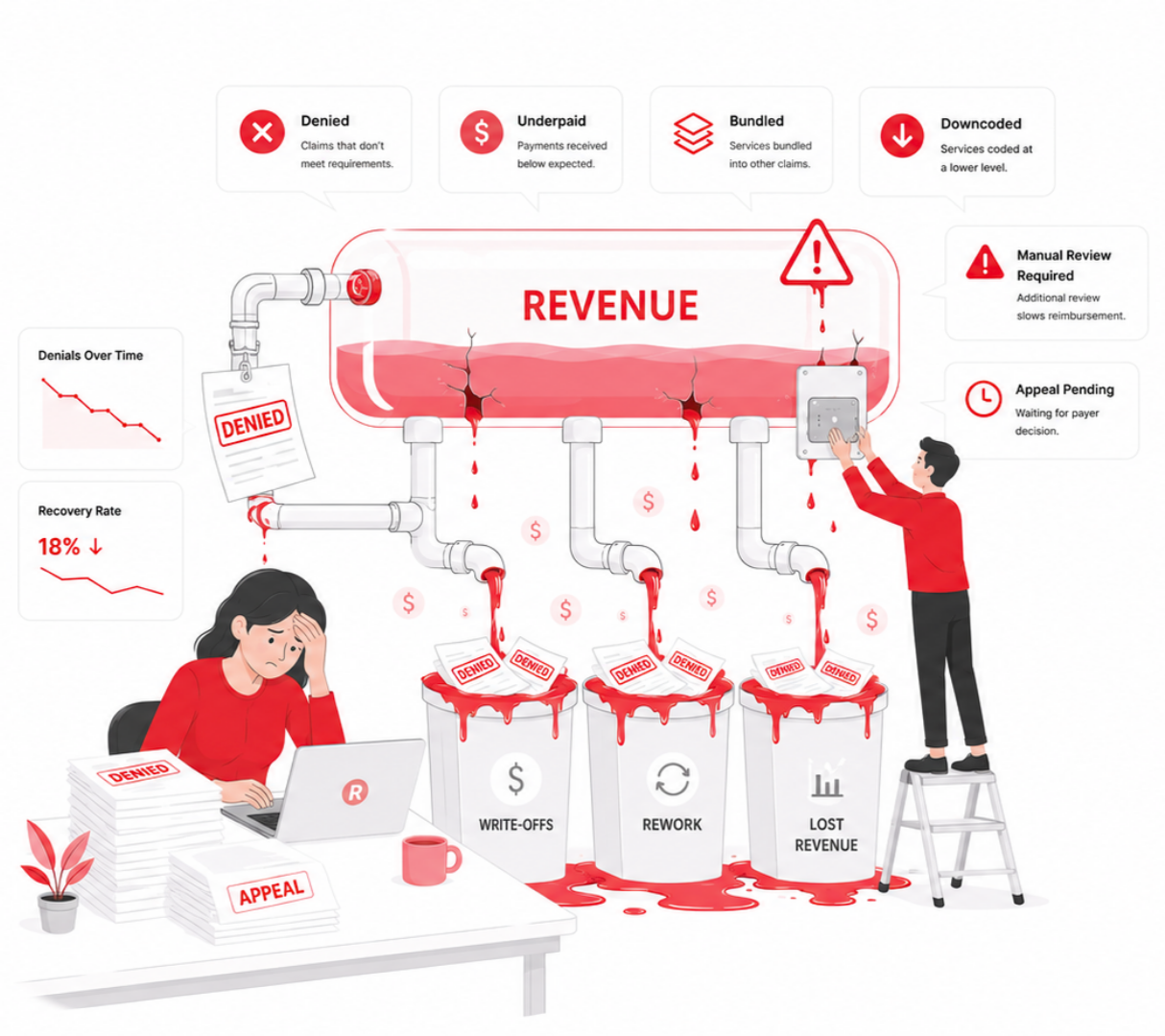
Claim Denials Are Draining Your Revenue
Every denied claim costs more than money. It slows care, frustrates patients, and forces your team to spend hours fixing problems instead of focusing on what matters.
When denials stack up, revenue slips away and staff morale sinks. The longer they go unresolved, the more your organization loses — financially and operationally.
Red Sky Health gives you the tools to stop the cycle. We streamline the process, eliminate friction, and put your team back where they belong: caring for patients.
Recover lost revenue. Restore focus. Strengthen care.

$5 Trillion in claims are submitted to health insurance carriers annually

>$
5.0
Trillion
More than $5 Trillion of claims are submitted to health insurance carriers every year in the USA

16
%*
Denied
$800 Billion Addressable Market
*Based on market reports
*Based on market reports

+
26
%
Increase
Rise in denials in the last 3 years
The current process to get denials paid doesn’t work
86%
of denials are due to mistakes and errors that can be fixed and re-submitted for payment

Extremely labor intensive

Limited automated tools

Many denials are never resubmitted